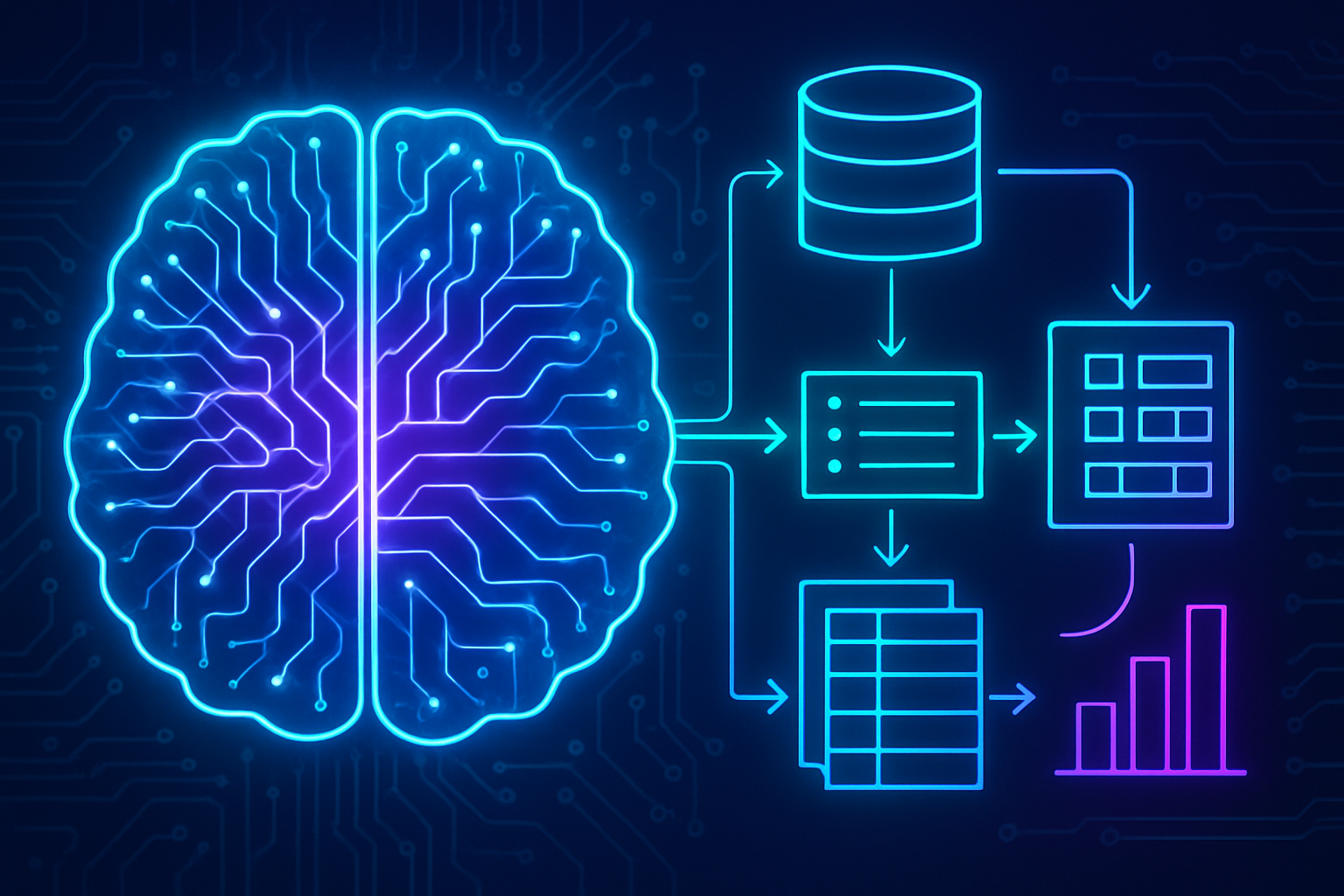
The Future of Data Engineering: How Generative AI is Transforming the Field
Exploring how GenAI is revolutionizing data engineering workflows, from automated pipeline generation to intelligent data quality monitoring.
The Future of Data Engineering: How Generative AI is Transforming the Field
The data engineering landscape is experiencing a seismic shift with the advent of Generative AI (GenAI). As someone who has been working extensively with AWS Bedrock and implementing AI agents in production environments, I've witnessed firsthand how these technologies are not just augmenting our capabilities—they're fundamentally changing how we approach data engineering challenges.
The Current State of Data Engineering
Traditional data engineering has always been about building robust, scalable pipelines to move, transform, and store data. We've relied heavily on:
- Manual pipeline development and maintenance
- Rule-based data quality checks
- Static monitoring and alerting systems
- Human-driven troubleshooting and optimization
While these approaches have served us well, they come with inherent limitations: high maintenance overhead, reactive problem-solving, and significant time investment in repetitive tasks.
Enter Generative AI: A Paradigm Shift
Generative AI is introducing unprecedented automation and intelligence into data engineering workflows. Here are the key areas where I've seen transformative impact:
1. Automated Pipeline Generation
One of the most exciting developments is the ability to generate data pipelines from natural language descriptions. In my recent work with AWS Bedrock, I've implemented systems that can:
- Understand business requirements expressed in plain English
- Generate optimized SQL queries for complex transformations
- Create infrastructure-as-code templates for AWS services
- Suggest best practices for data modeling and architecture
# Example: AI-generated pipeline code
def generate_pipeline_from_description(description: str) -> dict:
    """
    Uses Bedrock's Claude model to generate pipeline configuration
    from natural language description
    """
    prompt = f"""
    Generate an AWS Glue ETL pipeline configuration for:
    {description}

    Include: source configuration, transformations, and target setup
    """

    response = bedrock_client.invoke_model(
        modelId="anthropic.claude-v2",
        body=json.dumps({"prompt": prompt, "max_tokens": 2000})
    )

    return parse_pipeline_config(response)
2. Intelligent Data Quality Monitoring
Traditional data quality rules are static and require manual updates. GenAI enables dynamic, context-aware quality monitoring:
- Anomaly detection that learns from historical patterns
- Automated rule generation based on data profiling
- Natural language explanations of quality issues
- Predictive quality scoring for incoming data
3. Self-Healing Data Systems
Perhaps the most revolutionary aspect is the emergence of self-healing data systems. These systems can:
- Automatically detect pipeline failures and performance degradation
- Diagnose root causes using historical incident data
- Implement fixes or suggest remediation strategies
- Learn from incidents to prevent future occurrences
Real-World Implementation: My Experience with AWS Bedrock
In my current role, I've implemented an AI agent using AWS Bedrock that has transformed our competitive intelligence pipeline. Here's what we achieved:
The Challenge
Our sales team needed real-time competitive intelligence integrated directly into Salesforce CRM, but manual research was taking hours per opportunity.
The Solution
We built an AI agent that:
- Ingests data from multiple sources (news, company websites, financial reports)
- Processes information using Bedrock's Anthropic LLMs
- Generates insights tailored to specific sales opportunities
- Delivers results directly in Salesforce
The Impact
- 50% reduction in research time
- Enhanced win rates through better competitive positioning
- Automated updates ensuring information freshness
Best Practices for GenAI in Data Engineering
Based on my experience, here are key considerations for implementing GenAI in data engineering:
1. Start with Clear Use Cases
Don't try to AI-ify everything at once. Focus on:
- Repetitive, rule-based tasks
- Areas with high manual effort
- Processes requiring domain expertise
2. Implement Robust Validation
GenAI outputs need validation:
- Automated testing of generated code
- Human review for critical decisions
- Gradual rollout with monitoring
3. Design for Explainability
Ensure your AI systems can explain their decisions:
- Audit trails for all AI-generated outputs
- Confidence scores for recommendations
- Fallback mechanisms when AI confidence is low
4. Focus on Data Governance
GenAI amplifies the importance of data governance:
- Data lineage becomes more complex
- Privacy and security considerations multiply
- Compliance requirements need careful attention
The Road Ahead: Emerging Trends
Looking forward, I see several exciting developments on the horizon:
Multimodal Data Processing
Future AI agents will seamlessly handle:
- Structured and unstructured data
- Text, images, and video content
- Real-time and batch processing
Collaborative AI Systems
Multiple AI agents working together:
- Specialized agents for different data domains
- Orchestration systems managing agent interactions
- Collective learning from shared experiences
Natural Language Data Interfaces
Business users will interact with data using natural language:
- Conversational analytics replacing traditional dashboards
- Voice-activated data queries and insights
- Automated report generation from simple requests
Challenges and Considerations
While the potential is enormous, we must address several challenges:
Technical Challenges
- Model hallucinations and accuracy concerns
- Integration complexity with existing systems
- Performance optimization for real-time applications
Organizational Challenges
- Skill gap in AI/ML technologies
- Change management for traditional workflows
- Cost considerations for AI infrastructure
Ethical Considerations
- Bias in AI-generated insights
- Transparency in decision-making processes
- Accountability for AI-driven actions
Conclusion
Generative AI is not just another tool in the data engineer's toolkit—it's a fundamental shift toward intelligent, self-managing data systems. The organizations that embrace this transformation thoughtfully and strategically will gain significant competitive advantages.
As we move forward, the role of data engineers will evolve from building and maintaining systems to designing and orchestrating intelligent data ecosystems. The future is not about replacing human expertise but augmenting it with AI capabilities that handle routine tasks while we focus on strategic, creative problem-solving.
The journey has just begun, and I'm excited to be part of this transformation. The next few years will be crucial in defining how GenAI reshapes data engineering, and I believe we're on the cusp of the most significant advancement in our field since the advent of cloud computing.
What are your thoughts on GenAI in data engineering? Have you started experimenting with these technologies in your organization? I'd love to hear about your experiences and challenges in the comments below.